
Apostille: consular legalization is over

China acceded to the 1961 Hague Convention on 8 March 2023, and it entered into force between China and the United States on 7 November of that year. From that date the Embassy and all four consulates general ceased consular authentication. The notice is published on every one of their websites.
What replaced the old chain
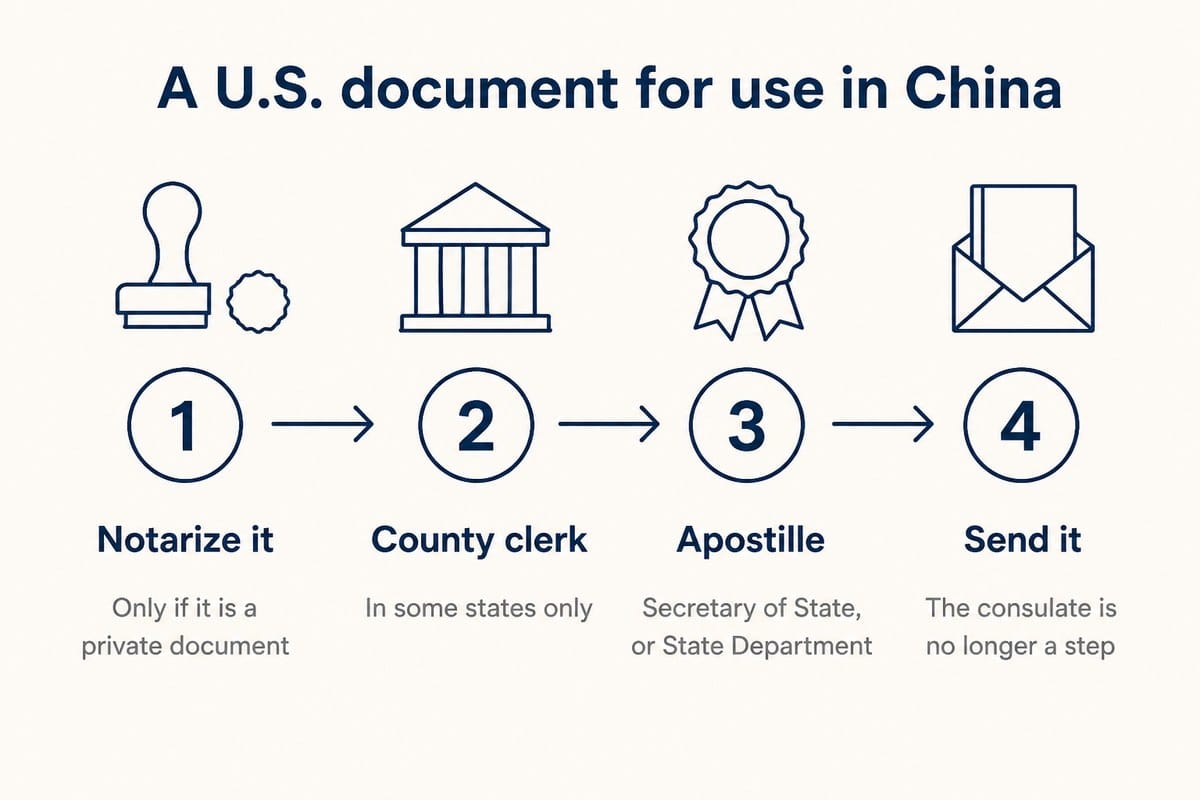
| Before 7 Nov 2023 | Now |
|---|---|
| Notarise the document | Notarise the document, if it is private |
| Certify with the County Clerk, in some states | Certify with the County Clerk, in some states |
| Authenticate with the Secretary of State | Apostille from the Secretary of State, or the State Department for federal documents |
| Legalise at the Chinese consulate | Nothing. You are done. |
The competent authorities for a United States apostille are listed by the Hague Conference. For a document issued by a state, it is that state's Secretary of State; for a federal document, the Authentications Office of the Department of State.
The part the change did not fix
An apostille certifies the signature and the seal. It does not guarantee that the receiving party in China will accept the document, and the consulates say so expressly.
Format, content, time limits and translation are set by whoever is asking for the document, and those requirements are worth confirming before you start.
How long it takes now
The old chain had three queues in it and could take a month. An apostille from a Secretary of State is usually days, and for federal documents the State Department publishes its own timescale. Removing the consular step removed both the longest wait and the fee that went with it.
What has not changed is the notarisation at the start. A private document (an affidavit, a power of attorney, a declaration) is not a public document until a notary has signed it, and only public documents can be apostilled.
Need more information or have something to add? Leave a comment.