
Do U.S. citizens need a visa for China?

This is the most searched question in the whole subject, and the answer has not changed while a lot of the internet has moved on. China has extended visa-free entry to dozens of countries since 2023, much of Europe, Japan, Australia, New Zealand and others, and the United States is not among them.
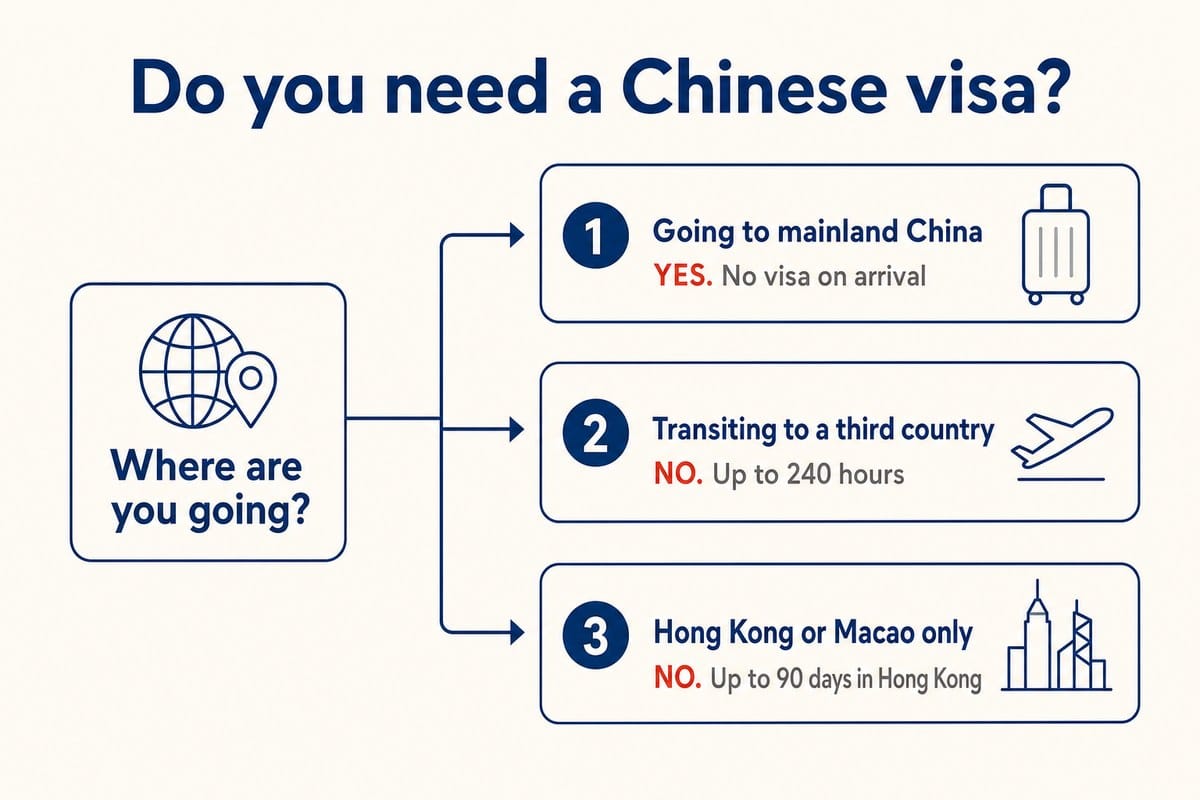
The consulates put it plainly: U.S. citizens must obtain a visa before arrival in China. You are not eligible for a landing visa. Arriving without one means being turned around at the border.
What Americans can do without a visa
| Situation | Visa needed? | How long |
|---|---|---|
| Tourism, business, family, study in mainland China | Yes | — |
| Airport transit without leaving the port of entry | No | Up to 24 hours |
| Transit onward to a third country through 60 listed ports | No | Up to 240 hours (10 days) |
| Hong Kong SAR | No | Up to 90 days |
| Macao SAR | No | Short visits |
The 240-hour transit rule is the one worth understanding, because it is genuinely useful and widely misread. It requires you to be travelling from China onward to a third country or region. A trip that leaves the United States, spends a week in Shanghai and flies home does not qualify, however short it is.
The visa itself
Why the confusion is so widespread
China's visa policy has moved quickly since 2023 and in one direction only: more countries, longer stays, fewer documents. Coverage of those changes rarely says who is excluded, so a reader comes away with the impression that China has opened up generally.
It has, but not to American passports, and the gap between the headline and the rule is where people lose money on non-refundable tickets.
The second source of confusion is the word visa-free itself, which gets used for the transit exemptions as well. Those are real and Americans qualify, but they are conditional on leaving for a third country and they are decided at the border rather than granted in advance.
Need more information or have something to add? Leave a comment.